
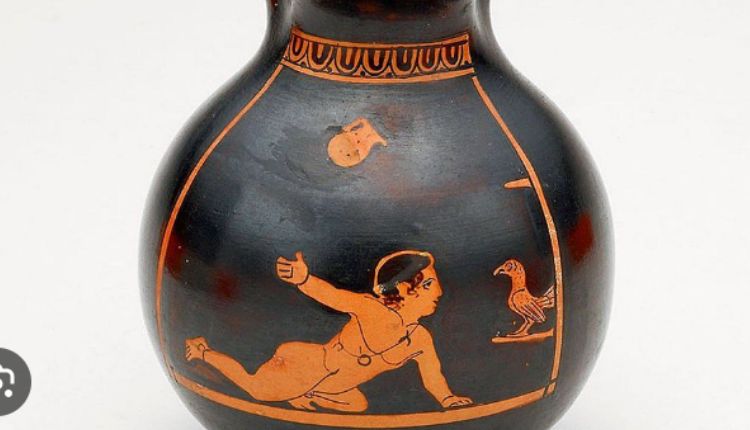
Archaeologists discover a lot of cool things every day. National Geographic has a website that covers archaeological news, different ancient sites, and mysteries in a format for general readers. This year, researchers have discovered a lost city from the Empire of Mittani, an ivory lice comb that contained the world’s first message, new clues about limb amputation, and more.
Mummy Portraits
For more than 115 years, mummy portraits—lifelike paintings of people from Egypt’s Roman era—have posed questions that scholars are only now beginning to unravel. But it’s not just the science that’s giving them new insights; even the ways they came to museums have opened up avenues of research.
Mummy archaeology news are usually made of wood—locally grown sycamore, pine, fir or cedar, or imported oak, cypress or yew. X-ray imagery shows where metal nails or brads were added, and the back of one has stamps and stickers that trace it to Theodor Graf, an Austrian art dealer. Those clues give researchers the chance to compare how these works were made, and how they may have passed from burial site to museum.
Most of the portraits are of upper-class people, though there is one depicting a lower-class person. The exhibition also includes mummy masks, which were designed to present an idealized image of the dead in the afterlife.
The two entire mummy portraits and fragmentary pieces of a few others were discovered in a necropolis in Gerza, Egypt, the first time these types of finds have been unearthed since they were last uncovered more than 110 years ago by English archaeologist Flinders Petrie. They date to the Ptolemaic period (305 BC to 30 BC) and the Roman era (30 BC to 390 AD).
These mummy portraits were painted over the corpses of men, women and children of all social classes, suggesting that religious syncretism was common in these ancient times. But the quality of embalming varied among mummies, with higher-class individuals getting better preservation and a more lifelike painting.
Despite their differences, these mummy portraits share some underlying characteristics that give them a common look. “They all seem to have a similar facial format,” Ebbinghaus says. “The way in which features are located, and the proportions and sizes of those features are similar.” In particular, mummy portraits use simple foreshortening to create a sense of movement. They also shift centers of symmetry to simulate a subject’s turning head. The result is a kind of visual language that, if studied enough, could give archaeologists a clue as to how these portraits were painted.
Leg Amputation
The word “amputation” is often used to describe the removal of a body part. However, the term can be more precisely reserved for the separation of bones or limbs between joint surfaces. Each particular site throughout the upper and lower limbs has individualized characteristics of bone shape, nerves, musculature and blood vessels. It also has specific muscles, skin and soft tissue envelope structures available for padding and protection. The surgeon can choose from several types of amputations depending on the location and needs of the patient.
This year has seen no shortage of archaeological discoveries, with a wide variety of topics making headlines. Some of the most interesting discoveries this year include the discovery of a mummy portrait and a 3,700-year-old grave site. Other finds include the reexamination of a set of footprints in Tanzania and the revelation that they are the oldest evidence of human bipedal locomotion.
One of the most fascinating discoveries of the year was made at Notre Dame Cathedral in France. While the church was under renovation, archaeologists discovered two lead tombs. One contained the remains of a woman, and was adorned with valuable objects such as bracelets, necklaces and a silver diadem or crown. This discovery suggests that the woman was a member of the elite and held a high position in society.
After amputation, the body can sometimes experience a feeling that the missing limb is still present or even painful, a condition known as phantom sensations. This is caused by the remaining nerve connections in the spinal cord and brain that “remember” the missing limb. The good news is that there are steps that can be taken during the amputation surgery to reduce these symptoms. These techniques do not eliminate phantom sensations completely, but they can greatly reduce the severity of them.
Post-amputation, it is important to make sure that the limb heals correctly and is able to function normally. This includes maintaining limb strength, keeping the joints mobile and preventing edema (swelling). It is also important to keep the stump clean and dry. Ideally, the stump should be covered by muscle to improve its strength, shape and coverage and to help reduce pain.
Ancient Poop
Researchers often turn to fossilized poop, or coprolites, to learn more about past diets. While finding a pile of ancient feces might not bring the same initial excitement as discovering a shiny artifact, these bits of preserved dung can reveal an incredible amount about what humans and other animals ate.
One such case comes from a dig in Spain where archaeologists found evidence that Neanderthals were actually pretty veggie-centric. A new analysis of fecal residue, published in the journal PLOS One, supports earlier views that these early humans were not a purely meat-eaters. Using chemical markers, the scientists identified signs of both plant and animal digestion in the ancient excrement. The team also found traces of the internal organs of cattle, including the heart, kidney, and tongue, which is often called “offal” and is the part that gets fed to dogs.
While the findings are intriguing, the team is careful to note that their data is not definitive. They plan to continue collecting and analyzing excrement, especially from locations with known meat-eating populations.
Even more intriguing are traces of parasite eggs in the poop of those who built Stonehenge, reports CNN. Researchers found a pile of fossilized human feces, or coprolites, at a prehistoric settlement near the site of the famous monument. The poop, which dates to around 2500 BC, showed that the villagers who lived there feasted on the internal organs of cattle, including the tongue and liver, and fed the scraps to their dogs. The poop also contained the eggs of tapeworms, indicating that those who ate the offal were infected with parasites that enter the body through undercooked meat.
The study also reveals that these prehistoric settlers lived in luxury. The team analyzed 2,600-year-old feces from pit toilets at two buildings used by the elite of Iron Age Jerusalem’s Kingdom of Judah. They discovered traces of the giardia parasite, which causes dysentery. Giardia has evaded previous research, perhaps because it’s hard to detect in feces samples without special techniques.
Biblical Archaeology
Archaeology is a discipline that uses the study of material remains from past societies to help understand and interpret those cultures. It also provides a context of reality to biblical stories that might otherwise seem unreal. Some people of faith require proof in order to believe, while others simply want to know that their beliefs are grounded and not just fantasy. Whether or not archaeology provides the necessary evidence for each is up to the individual, but it is a valuable tool for helping to bring Bible stories and events to life.
The field of biblical archaeology is a subset of archaeology that uses finds from the ancient Middle East to understand and interpret the Bible, which is the central text for Judaism and Christianity. The field of biblical archaeology began to gain interest in the 19th century, and many foundations were formed to promote it. It was at this time that T.E. Lawrence began his archaeological career in the Middle East with a dig at Carchemish, alongside Leonard Woolley.
Today, excavations in Israel and other countries are conducted by both secular and religious groups to uncover important biblical artifacts. Salvage excavations, which are conducted due to the building of roads and other infrastructure in the region, have revealed a variety of significant finds. Many of these discoveries have helped to answer questions that have been debated for centuries, such as how and why the Jews were expelled from Egypt and when the exodus really took place.
One of the most significant contributions that biblical archaeology has made has been through the discovery of the Dead Sea Scrolls. These texts, which include fragments of biblical books along with other apocryphal (non-canonical) writings, offer a wealth of information on everyday life in the ancient world. It is this insight into the daily lives of the people who lived during the time of the Bible that helps to give credence and legitimacy to the biblical narrative.
While there are some critics who argue that biblical archaeology can lead to a misreading of the Bible, it is generally agreed upon by scholars that links between archaeological discoveries and the Biblical text should be made cautiously. In the past, some archaeologists have used findings to support their ideological views, which has caused some controversy. However, this is rarely the case nowadays, as most scholars agree that naive or unsubstantiated connections between discoveries and the Bible are less than useful for understanding the Bible and its message.
Conclusion
Archaeology continues to be a captivating field of study, unearthing remarkable discoveries that shed light on our ancient past. Through meticulous research and excavation, archaeologists enrich our understanding of human history, culture, and evolution. As technology and methodologies advance, we can look forward to even more fascinating revelations in the years to come.
FAQs:
- What is archaeology? Archaeology is a scientific discipline that investigates and analyzes human history and prehistory through the study of artifacts, architecture, and other physical remains left behind by past civilizations. It aims to reconstruct and interpret past cultures, societies, and human behavior.
How are archaeological sites selected for excavation? Archaeological sites are selected for excavation based on various factors. These include historical records, local knowledge, geographical significance, and the presence of potential artifacts. Advanced techniques like aerial surveys, LiDAR, and ground-penetrating radar also aid in identifying promising sites beneath the surface.
