
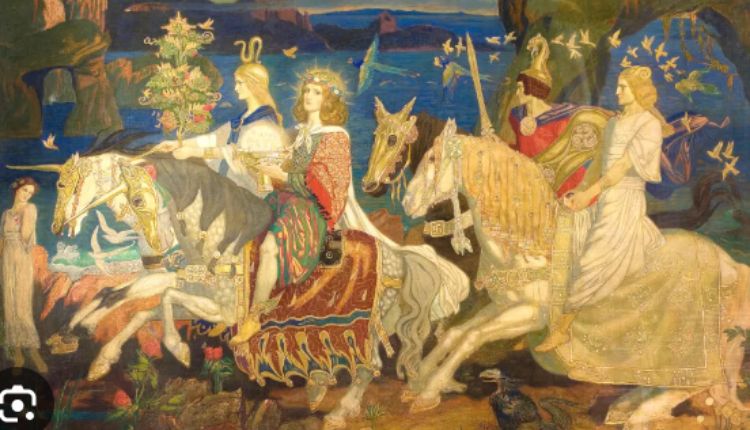
Introduction
Celtic religion stands as one of the most enigmatic and fascinating belief systems in human history. Rooted in the cultures of the ancient Celtic peoples who inhabited regions of Europe between the Iron Age and the early Medieval period, this spiritual tradition has captivated the minds of historians, archaeologists, and modern enthusiasts alike. Despite its antiquity, many aspects of Celtic religion remain shrouded in mystery, making it a captivating subject of exploration and research. In this article, we delve into the world of Celtic religion, its core beliefs, rituals, deities, and its enduring legacy on contemporary spirituality.
Origins And Evolution Of Celtic Religion
Celtic religion emerged among the Celtic tribes that inhabited areas spanning from Ireland, Britain, Gaul (modern-day France), the Iberian Peninsula, and parts of Central Europe. It was an animistic and polytheistic belief system that recognized the sacredness of nature and the existence of numerous gods and goddesses who governed various aspects of life.
The religion evolved over time, incorporating influences from neighboring cultures such as the Roman and Germanic societies. Despite this, the core principles of reverence for nature and a deep connection to the land and ancestors remained central to Celtic religious practices.
Deities Of The Celtic Pantheon
The Celtic pantheon was rich and diverse, with numerous deities associated with natural elements, fertility, war, and more. Among the most revered were:
- Dagda: Often considered the chief god, the Dagda symbolized the earth, abundance, and wisdom. He carried a magical cauldron, symbolizing inexhaustible sustenance.
- Brigid: The goddess of poetry, healing, and smithcraft, Brigid held a prominent place in Celtic religious life and was celebrated during the festival of Imbolc.
- Lugh: The god of skill and mastery, Lugh was associated with the sun and was celebrated during the harvest festival of Lughnasadh.
- Morrigan: A complex goddess associated with war, fate, and sovereignty, Morrigan possessed the ability to shape-shift and was often represented as a crow.
Sacred Sites And Rituals
Celtic religious practices often centered around sacred sites, such as stone circles, burial mounds, and natural landmarks. These places were believed to be imbued with spiritual energy and served as gateways to the Otherworld, a realm where the gods resided.
Festivals played a crucial role in Celtic religious life, marking important seasonal transitions and agricultural cycles. Samhain (Halloween), Imbolc, Beltane, and Lughnasadh were among the four principal festivals celebrated with rituals involving bonfires, feasting, and offerings to appease the gods.
Druids: The Spiritual Custodians
The Druids served as the spiritual leaders and custodians of Celtic religion. These learned individuals held deep knowledge of the natural world, astronomy, and sacred rituals. They played a crucial role in conducting religious ceremonies, providing counsel to rulers, and preserving oral traditions and wisdom.
The arrival of Christianity gradually led to the decline of Druidic practices, as Christian missionaries sought to replace indigenous beliefs with their own teachings.
Enduring Legacy And Modern Revival
The decline of the Celtic religion did not mark the end of its influence. Elements of Celtic spirituality, mythology, and artistry have endured through folklore, literature, and art. Moreover, there has been a revival of interest in Celtic spirituality in modern times, often referred to as Celtic Reconstructionism or Neo-Druidism.
Conclusion
Celtic religion remains a captivating subject of study and a testament to the rich spiritual heritage of the ancient Celtic peoples. Its emphasis on the interconnectedness of nature, the veneration of diverse deities, and the profound reverence for the cycles of life and death have left an indelible mark on the world. Despite the gaps in historical records, the legacy of Celtic religion continues to inspire and shape contemporary spiritual movements, reminding us of the enduring power of ancient beliefs.
FAQs
Q1: Are there any surviving texts or scriptures from the Celtic religion?
A1: Unfortunately, no surviving texts or scriptures directly written by the ancient Celts themselves exist. Most of what we know about Celtic religion comes from accounts by Roman and Greek writers, as well as inscriptions on stones and artifacts. These sources provide valuable insights, but they are often colored by the perspectives and biases of the writers.
Q2: How did the arrival of Christianity impact Celtic religion?
A2: The spread of Christianity in Celtic regions led to the gradual decline of traditional Celtic religious practices. Christian missionaries, such as St. Patrick in Ireland, actively worked to convert the Celtic peoples, and many pagan rituals were assimilated into Christian traditions. As a result, elements of Celtic spirituality persisted and intertwined with Christian practices, influencing the development of Celtic Christianity. Despite this syncretism, the original Celtic religion gradually faded away, leaving behind a lasting legacy in folklore and cultural expressions.
